Showing posts with label Hartnell. Show all posts

Wednesday, February 23, 2011

Season 1 in Review


Well with the first season complete I have a few thoughts about it.

First Time Episodes
There were a few episodes in this season that I had never seen before.
  • Marco Polo
  • The Keys of Marinus
  • The Sensorites
  • The Reign of Terror

It was good to be able to see most of these stories - as a classic series fan I felt my experience was incomplete. It was almost like getting to see new classic Who because I didn't really know anything about any of these episodes before now. I'll try to go back and watch the full recon of Marco Polo some time soon to round this out but it's more for the sake of completionism than anything else.

Missing Episodes
The missing episodes suck. As I mention above I had to skip over Marco Polo. I am a fan of audio dramas but not on my television - I get easily distracted there. Fortunately this season is mostly intact with only Marco Polo completely missing along with the two missing episodes from Reign of Terror.

Impressions of First Doctor

This Doctor is certainly not what I'm used to seeing. Most people point and the grumpy and gruff nature of the first Doctor but a big item for me (and previously mentioned) was that the Doctor seemed like he tried not to interfere and wasn't looking for trouble whereas some later Doctors revel in interference and searching for adventure. It was also strange how he almost kidnaps his companions and how they want to get away. It isn't until later in the season where it seems that Ian and Barbara even want to stay with the Doctor.

The Companions
I actually like Ian the best of the companions, not sure why. At first I was cool to both Ian and Barbara but I've warmed up to both of them considerably. They have become much more interesting now that they aren't desperate to get away. Susan on the other hand has been the reverse for me. She's supposed to be intelligent yet most of the time she seems to be crying, confused or under some affliction/mind control. I think they could do more with it but I am also looking at it from a 2011 point of view.

Historical Stories

I'm feeling very mixed about these. Doctor Who has always done historical stories pretty well and they do a good job with Reign of Terror. But one of the things that continually bug me about these early examples is the lack of a science fiction element. That is magnified by the early Laws of Time where nothing can really change from history. In other words, in these early historical stories history and time itself isn't at stake -- only the lives of the Doctor and his companions. This is a bit jarring for me as I'm used to history and the Doctor being intertwined closely. Events in Earth's history are often influenced (or caused directly) by the Doctor or by the alien menace that he is battling. In these early historicals there isn't even an alien menace.

The Final Word
Overall I liked the first season. It wasn't great and even had a few duds in the line up. Still a collection of average, watchable stories that can still be enjoyable almost 50 years after they originally transmitted is a feat in itself.

Tuesday, February 22, 2011

7. The Sensorites


One of the things I always loved about Doctor Who was the imagination of their writers. Star Trek's aliens were okay but not nearly as imaginative as Who. Star Trek aliens were, for the most part, humans. They had wrinkly faces or pointy ears or different colors but Doctor Who always pushes the limits, despite the shaky sets and tiny budgets, especially when compared to Star Trek.

I think a big reason Doctor Who had to go further than Star Trek is aliens in DW were often monsters and monsters can't be too human. I don't want to come across as being critical of Star Trek, so let's not go any further on the comparison.

Needless to say I always appreciated Doctor Who for their monsters and at least trying...even when they failed -- the Nimon, the Myrka and sadly...the Sensorites.

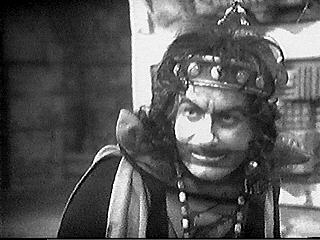
They almost pull off a scary monster, even with the limitations of the time. The strange facial hair wasn't a good addition. The problem with this scary monster is as soon as we start learning about them we discover they are actually pretty lame. They have a boring caste society, they are afraid of the dark, they don't like loud noises and they need a stethoscope to communicate (old fashion Ood communications device?).

I had never seen this episode before and was looking forward to it, but my excitement waned with each of the seven episodes. It took a few goes to get through them all but it's over now.

There was some things that I did like. The Sensorites were creepy early on. The episode had an quasi-epic scope to it - covering a new alien race with strange powers, trapped space travelers, a rare and valuable mineral, sabotage, a war, domestic political plots in a society where such plots aren't supposed to exist (decay of a civilization?). The main problem is so much of the time is wasted on the boring political ambitions of the city administrator -- or rather his ridiculous plots.

This episode also begins a familiar pattern that would become the backbone of so many classic who stories to come: an alien world, a new race, multiple intrigues and of course travel into the future. There is even a reference by a Sensorite about how intriguing humans are...a sentiment that will be repeated many times in the future, usually by the Doctor himself. It just isn't enough to save this story.

Ranking: 5/10 (below average)

Sunday, February 20, 2011

6. The Aztecs


My memory of The Aztecs was pretty fuzzy as I had only seen it once and that was quite some time ago, so this was a nice refresher.

I'm a bit of a history buff and the Aztec civilization was one of the first historical civilization that I had learned about that really captured my imagination and drove my later love of history and "ancient" cultures. I have no idea how accurate the costumes were but I certainly thought they looked good. The names used certainly sounded Aztec -- Yetaxa, Tlotoxyl -- great stuff.

The moral dilemma the TARDIS crew faces with Autloc was also well done and puts a little bit of focus on the consequences of the Doctor's travel and meddling. Autloc believes that Barbara is the goddess Yetaxa and he suffers dearly for this. At one point in the story he even begs Barbara to not be a false goddess. Later in the show the Doctor will face other dilemmas and more consequences of his travels: the incubation room in Genesis, Satellite 9 in the new series, The Face of Evil, the Time War...

Despite all the good there was some bad that really hurts this episode. The entire plot-line relating to the Doctor and Cameca ("the love story") was pretty stupid. The show barely touches the subject of love during the classic run, perhaps because this initial foray into the subject matter was so awful that they decided it didn't fit.

The fight scenes were all just brutal. They were both long and poorly choreographed and that is a fatal combination. Just terrible.

I also find that the historical stories are a bit of a mixed bag for me. I do like history but I watch Doctor Who for science fiction. They do a better job weaving these two genres together in the new series (e.g. Fires of Pompey) and although the lack of sci-fi elements is a bit annoying it doesn't take away too much since DW usually does a very good job on the historical feel of these stories.

Finally, the aspects of human sacrifice that are apart of the Aztec ways are addressed in the story. I felt that this could have had some additional potential but I guess at the same time this is when DW was more of a childrens show and they probably didn't want to focus too much on the grisly topic of sacrificing humans. I would have liked to know a bit more about the "perfect victim" -- however we do get something out of Barbara's attempts to end the practice other than an ear ache....something big in fact - the first outlines of the rules of time travel and what will later become referred to as the Laws of Time.

Ranking: 6/10 (average)

5. The Keys of Marinus


Keys was one of the surviving stories that I had never seen before a few days ago.

This 6-episode story is unlike most DW stories -- it is like a series of short stories that are connected by an overarching goal...the collection of the Keys of Marinus. It is a cool idea but for the most part it doesn't achieve its ambitious goals. The problem with the story is that each individual episode are just over 20 minutes long and you can't tell a good DW story from start to finish in that short of time. It may have worked better as a series of 3, two-episode stories that could flesh the unconnected plots together better.

Despite that criticism I did enjoy the story for the most part.

Ranking: 6/10 (average)

4. Marco Polo


And here we come to the first of a few stories that I have never seen. Of course, in the case of Marco Polo, I am not alone in that regard. It is one of the episodes that have been lost to the ages when the BBC wiped a ton of tapes including many of the Hartnell and Troughton stories. Unfortunately this was a more primitive time when things like the VCR didn't exist and as a result there are no known copies of Marco Polo in existence or copies of a great number of other episodes.

In any case, much has been written by many more knowledgeable that I about that subject and I can do little to add to the discussion. Fortunately a group of fans known as Loose Cannon have done some incredible work and have created "reconstructions" of some lost stories using the surviving audio tracks, some very short video clips and a lot of photos. Marco Polo is one of the stories that get the reconstruction treatment. In fact it is kind of cool as many of the photos are actually color whereas all the episodes are black and while. It is a bit weird seeing it in color, even if it is only still photos.

While I do love audio books and audio dramas --having listened to many Big Finish stories and all 7 unabridged Harry Potter books in the format -- I prefer to listen to them while driving or walking on my blackberry rather than watching them on my television. I get distracted. Marco Polo is 7 episodes long. I'm working on it but it will be a bit before I actually get it watched and I have moved on to the next surviving video.

I'll repost when I get the chance.

3. The Edge of Destruction

This episode is quite a disappointment.

It is basically a low-budget episode designed with cost savings in mind -- and let's be honest, if there is one thing classic Doctor Who didn't need was a lower budget episode.

The entire episode basically takes place in the Console Room and is an all-out fight between the Doctor and Barbara & Ian. Everyone is acting strangely and nothing makes a lot of sense until about 2 minutes to go in the story when they realize that the TARDIS is making everyone act insane. Much like the explanation for Bad Wolf some 45 years later it doesn't make a lot of sense but I'm not going to waste too much time being negative. This is about the good, not the bad.

With that I render my verdict...

Ranking 3/10 (failure)

2. The Daleks

This is obviously another huge episode in the history of Doctor Who. With An Unearthly Child you had the first appearance of the Doctor and the TARDIS - in the very next episode we are introduced to another classic, enduring and very popular element of the show: the Daleks.

As with the previous episode I had mixed feelings about this episode for very similar reasons. My early exposure to the Daleks were from the Pertwee and Tom Baker eras and Genesis of the Daleks would be one of the first I would have saw so much of my understanding of Daleks and their back story comes from that episode. Genesis was my favorite Who story for many years and Davros one of my favorite bad guys. The only Doctor Who toy I ever owned was a Davros toy.

To go back and see the first Daleks and the way their history, the fight with the Thalls, etc... is portrayed is so different than future Daleks it just sort of distracts me. The fact that they need electricity conducted from the floor of their city to move seems like a decidedly poor design plan and one you would think they would try to correct quickly. Ian getting "stunned" was awful. Modern Daleks don't have a stun setting!

The story did do a nice job of showcasing the deviousness of the Daleks we all know today. Planning to steal the anti-radiation meds, then letting them keep the extra kit so they could build enough trust to ambush the Thalls - all very good.

My mixed emotions leads to a mixed review;

Ranking: 6/10 (average)

1. An Unearthly Child

This is where it all began - a crazy old man, his grand daughter, and a blue police box in the corner of a junk yard.

"Just open the doors Doctor Foreman"

"Eh? Doctor who? What's he talking about?"


I enjoy the first two episodes of this story a great deal -- maybe it's the fan in me. Seeing elements that will be replayed throughout the show's long history used for the first time is just a thrill for me.

  • The confused looks and words of a person the first time the enter the TARDIS
  • How the TARDIS is supposed to change it's shape but is now stuck as a police box
  • The console room
  • The unreliability of the TARDIS

The list goes on.

But equally interesting is the elements of the show that had been abandoned later in the series or altered. In the early days the Doctor doesn't seem to be much of an interventionist. Later he goes exploring for trouble, not rocks.

The Doctor is also an exile, trying to get back to his home here whereas later he is a renegade who rejects Time Lord society.

The caveman part of the story is okay - not great that's for sure. I found the broken language tedious, the never ending prattle of fire dull and the behavior of the Doctor so at odds from his future self that it bothered me throughout the story.

Ranking: 6/10 (average)